
Amarnath Cave
Cave near Baltal, Ladakh
8.9 km from Baltal
The nearest town, for stays, food and fuel.
Amarnath Cave is a renowned high-altitude shrine set deep in the Himalayas, revered for the naturally occurring ice stalagmite that forms within its limestone chamber during the summer. Located amidst dramatic glaciated ridges and snowfields, the cave draws pilgrims and mountain trekkers undertaking a rigorous journey across high mountain passes. It stands as one of the most culturally significant and physically demanding mountain destinations in northern India.
Getting there
By road
- From BaltalNearest town1 hr 20 min · 10 km
Typical drive times without traffic. Stations and airports from OLA Maps; distances and typical drive times from OpenStreetMap (© OpenStreetMap contributors); notes from creators' Reels.
About Amarnath Cave
Written with AI from map data and general knowledge. Check prices and timings locally before you go.
About Amarnath Cave
Amarnath Cave is situated at an elevation of roughly 3,888 metres above sea level, carved into a sheer limestone cliff in the rugged upper reaches of the Himalayas. The cave is famous across the world as a sacred shrine dedicated to Lord Shiva. Inside the expansive cavern, water trickles from the ceiling onto the cold floor and freezes gradually into a towering ice stalagmite, known as the Shiva Lingam. This natural ice formation waxes and wanes with the seasons and ambient temperatures, reaching its full stature during the summer months before melting as the season turns.
The cave itself is substantial in scale, measuring roughly forty metres in height and open to the elements along its front face, revealing sweeping views of scree-covered slopes and snow-draped ridges. Surrounding the cave are high-altitude crags, perennial snowfields, and towering formations such as Amarnath Peak. For generations, this remote site has drawn ascetic wanderers and travellers across challenging alpine trails, combining deep cultural significance with the raw, untamed atmosphere of a high Himalayan wilderness.
Trekking Routes to Amarnath Cave
Reaching Amarnath Cave requires traversing demanding mountain terrain along one of two primary pathways: the traditional route starting from the Lidder Valley near Pahalgam, and the shorter, steeper route originating near Baltal. Both trails cut through rugged alpine landscapes, crossing high mountain passes, loose scree, glacial streams, and narrow paths cut into sheer mountainsides.
The route starting from the Pahalgam side is the longer of the two and typically spans multiple days. It takes travellers past notable alpine waters such as Sheshnag Lake and across the wide valley flats of Panjtarni. Because the elevation gain is gradual, this route allows for better acclimatization to the thinning mountain air. The Baltal route, on the other hand, is significantly shorter in total distance but features steep switchbacks cut straight into rocky mountain cliffs. While it allows fit trekkers to complete the climb in less time, the rapid ascent places severe physical strain on the body.
Read more
Best Time to Visit Amarnath Cave
Access to Amarnath Cave is strictly seasonal, confined to a brief window during the summer months, typically between late June or July and August. For the remainder of the year, heavy winter snowfall seals off the high passes, burying the walking tracks and surrounding valleys under massive drifts of snow and ice.
Even during the mid-summer opening, high-altitude alpine weather remains highly volatile. Warm, sunny mornings can quickly give way to freezing rain, thick fog, or sudden sleet storms. Daytime temperatures while walking under open sun can be mild, but evenings and early mornings regularly drop near or below freezing. Anyone heading toward the cave must check regional weather advisories before starting, as heavy rains can trigger rockfalls and mudslides along the narrow mountain tracks.
Physical Preparation and Safety
A trek to Amarnath Cave is a serious endurance challenge that demands good cardiovascular fitness, stamina, and proper acclimatization. Acute Mountain Sickness is a significant concern given that the cave sits close to four thousand metres. Spending a couple of days acclimatizing in base valleys before starting the ascent helps your body adjust to the drop in atmospheric pressure. Staying well-hydrated, avoiding overexertion on steep gradients, and keeping warm are fundamental rules of the trail.
Footwear and gear require careful thought. Sturdy trekking shoes with dependable ankle support and deep grip are essential for handling loose shale, wet mud, and packed snow. Travellers should dress in layers, including moisture-wicking base layers, an insulating fleece or down jacket, and a windproof, waterproof outer shell. Other necessities include a walking pole to ease pressure on the knees, polarized sunglasses to guard against snow glare, high-SPF sun protection, and a basic personal medical kit.
Places to Visit near Amarnath Cave
The alpine country surrounding Amarnath Cave is filled with dramatic geographic features, crystal-clear glacial tarns, and massive mountain massifs. Just two kilometres from the cave rises the prominent crest of Amarnath Peak, towering over the glaciated gullies. Further south along the trekking routes lies Sheshnag Lake, an emerald-green alpine lake set in a natural mountain amphitheatre, as well as the secluded waters of Har Nag.
To the west, the Kolahoi Glacier sits beneath the crags of Kolahoi Peak and Buttress Peak. This sprawling glacial system feeds the Lidder River, which flows through green river meadows and dense pine forests downstream. Travellers spending time exploring the broader region can also trek toward high-altitude tarns like Sona Sar and Doda Sar, or visit the scenic rolling pastures often called Mini Switzerland near Pahalgam. Each of these spots showcases the pristine, glaciated character of the northern alpine terrain.
Where to Stay near Amarnath Cave
Shelter in the immediate vicinity of Amarnath Cave is seasonal and basic. During the summer visiting period, temporary tent settlements and shelter camps are set up at designated staging grounds such as Baltal, Nunwan, Sheshnag, and Panjtarni. These encampments provide warm blankets, simple floor bedding, and communal facilities suited for a night's rest between trekking stages.
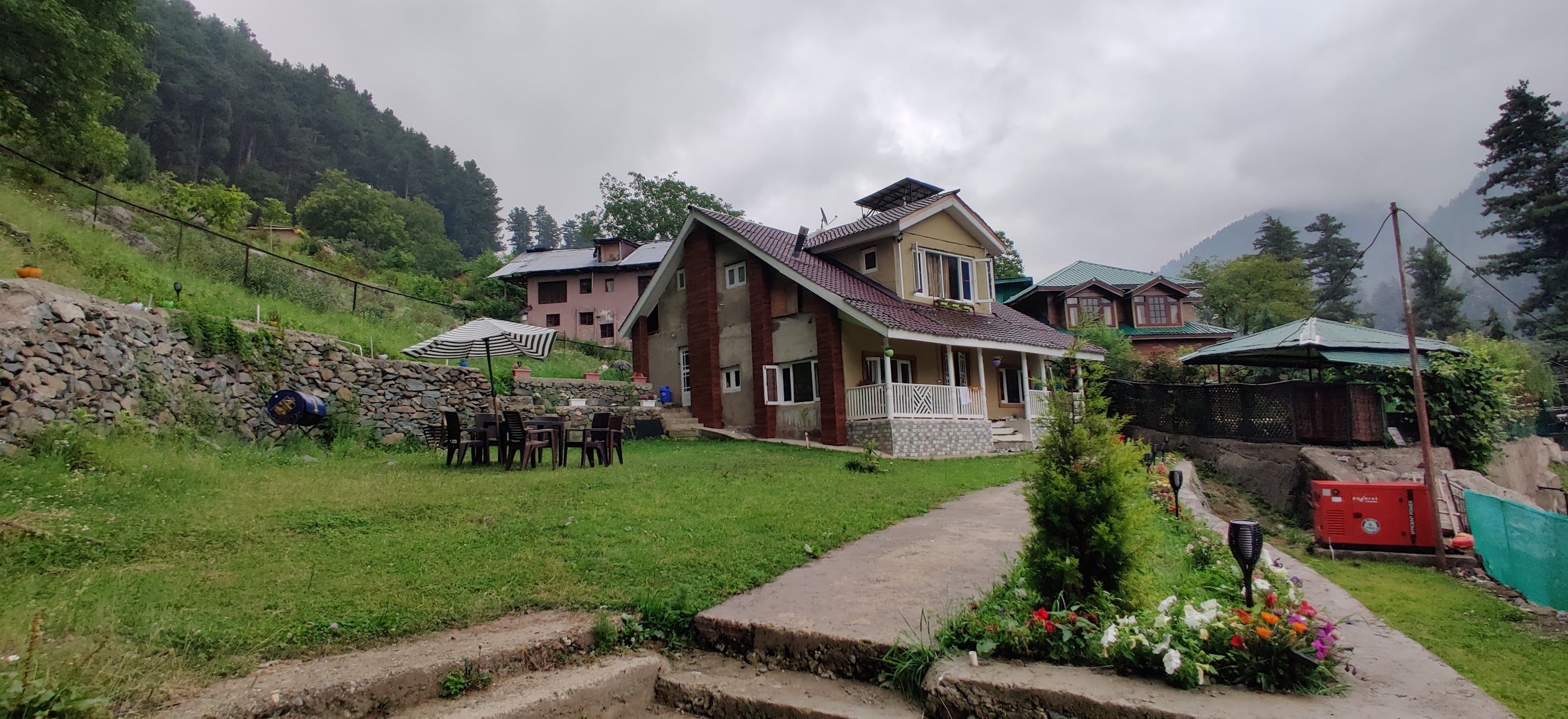
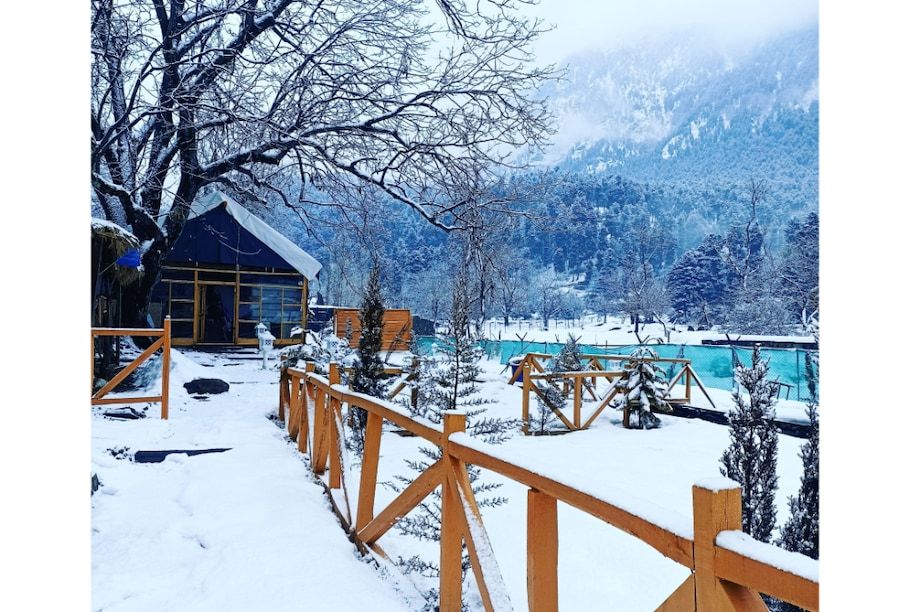
For those looking for comfortable bases before or after the climb, the lower valleys and transit towns offer a wider variety of stays. Travellers can find and book vetted riverside camps, independent cottages, and warm local homestays through HireACamp, offering a restful place to recharge after returning from the high trails.
Frequently asked questions
What is the natural ice lingam at Amarnath Cave?
The ice lingam is a naturally occurring ice stalagmite that forms inside the cave as water drips from the limestone roof and freezes on the cold floor, waxing and waning with the seasons.
How difficult is the trek to Amarnath Cave?
The trek is physically demanding due to rough rocky paths, steep vertical climbs, and high altitude approaching four thousand metres. Good physical stamina and proper acclimatization are essential.
Which trail is better: Baltal or Pahalgam?
The Baltal route is much shorter but very steep, making it physically taxing on the climb. The Pahalgam route is longer and spans multiple days, but features a gentler gradient that aids in acclimatization.
Can you visit Amarnath Cave during the winter?
No, the cave is completely inaccessible in winter due to sub-zero temperatures, intense blizzards, and trails blocked by heavy snow drifts.
What should I pack for the journey?
Carry sturdy trekking boots with good grip, thermal inner wear, warm insulating layers, waterproof clothing, trekking poles, high-UV sunglasses, and basic personal medications.
Where you'll be
Ladakh · 2 stays nearby shown with prices
Stays near Amarnath Cave
Book a place to stay close by
More places near Amarnath Cave
Within 20 km
Built from 0 Instagram posts by 0 creators. Every tip links back to the post it came from, and where creators disagree we show both sides.






