
Kangra Fort
Fort near Kangra, Himachal Pradesh
1 post · 1 sourced tip
Guide from 1 post by 1 creator
@realludhiana1
2.4 km from Kangra
The nearest town, for stays, food and fuel.
Visiting Kangra Fort
Kangra Fort is situated approximately 220 km from Ludhiana, reachable in about 4 hours by road.
Good to know
Tips from creators' posts. Each one links to its source.
Getting There
The fort is roughly 220 km from Ludhiana, which takes approximately 4 hours to reach by car.
Reported by @realludhiana1Source
Getting there
By road
- From KangraNearest town6 min · 2.7 km
- From Dharamshala53 min · 23 km
- From Ludhiana4 hr 20 min · 173 km
- From Amritsar4 hr 30 min · 200 km
By train, bus or air
- Kangra MandirNearest railway station53 min · 22 km
- Dehra Main Bus StandNearest bus stand57 min · 34 km
- Kangra AirportNearest airport30 min · 12 km
Typical drive times without traffic. Stations and airports from OLA Maps; distances and typical drive times from OLA Maps and OpenStreetMap (© OpenStreetMap contributors); notes from creators' Reels.
About Kangra Fort
Written with AI from creators' posts and map data. Check prices and timings locally before you go.
The history and significance of Kangra Fort
Kangra Fort, historically known as Nagarkot, stands as one of the oldest continually documented fortresses in the Indian subcontinent. Founded by the rulers of the Katoch dynasty, who traced their ancestry to ancient regional kingdoms, the fort served as the primary citadel and royal seat of the Kangra rulers for centuries. Because of its commanding strategic position guarding the Kangra Valley, the stronghold was repeatedly besieged by various powers over the centuries, including early northern invaders, Mughal emperors, Gurkha armies, and Sikh rulers, before coming under British administration.
In 1905, a powerful earthquake struck the Kangra region, causing severe structural damage to the fort's ancient buildings, palace quarters, and boundary walls. Despite the destruction, massive outer walls, bastions, and royal shrines survived. Today, the monument is protected and managed as a significant national heritage landmark, drawing travellers interested in Himalayan history and the military architecture of ancient hill states.
Architecture and layout of the fort
The fort is built atop an elevated ridge between two deep river ravines, a natural geographic feature that made it exceptionally difficult to assault. The entry sequence is defined by a succession of heavy stone gateways linked by stepped paths and flanked by stone ramparts. Known by historic names such as the Ranjit Singh Gate, Jahangiri Gate, and Ahani Gate, these checkpoints served as narrow bottlenecks designed to slow advancing armies.
Within the upper terraces lies the sacred and administrative heart of the fort. Stone-carved shrines dedicated to deities such as Ambika Devi and Lakshmi Narayan, alongside early Jain carvings, stand in open courtyards where intricate detailing is still visible on surviving pillars and plinths. At the highest point of the fort, the vantage points of the former palace terrace look out across the rocky riverbed below and north toward the snow-capped peaks of the Dhauladhar range.
Read more
Best time to visit Kangra Fort
The Kangra Valley experiences a range of seasonal climates, making timing an important consideration when planning a trip. The autumn and winter months, running from October through March, offer the most comfortable weather for walking through the extensive grounds. During this period, days are mostly clear and cool, with crisp air and unobstructed views of the surrounding mountains, though early mornings and evenings can be quite cold.
Springtime in March and April brings mild temperatures and flowering greenery across the valley, creating another pleasant window for sightseeing. The summer months of May and June can bring warm, sunny days to the valley floor, so an early morning visit is usually the best approach. The monsoon season from July to September brings heavy rains to Himachal Pradesh; while the valley turns exceptionally lush, the centuries-old stone pathways inside the fort can become slippery, requiring careful footing.
How to reach Kangra Fort
Kangra Fort is situated in Old Kangra and is readily accessible by road from major cities in northern India. From Ludhiana, the drive is approximately 173 to 220 kilometers and typically takes around 4 to 4.5 hours depending on the chosen route and traffic conditions. Travelers heading from Amritsar can expect a drive of about 200 kilometers, which usually takes roughly 4 hours and 30 minutes.
If you are traveling by road from Chandigarh, the journey covers roughly 219 kilometers and takes around 4 hours and 50 minutes along well-maintained highways leading into the Shivalik foothills. For those coming from Dehradun, the road trip spans approximately 390 kilometers and takes about 8 hours and 30 minutes. Kangra is also connected by regular intercity bus services, while local taxis and auto-rickshaws connect Kangra town center directly to the fort gates.
Tips for exploring Kangra Fort
Exploring the entire perimeter of Kangra Fort involves significant walking over steep ramps, worn stone surfaces, and uneven flights of stairs. Wearing sturdy footwear with good traction is strongly recommended to ensure stability on the cobblestones. Because much of the exploration is outdoors and exposed to the sun, carrying drinking water, a hat, and sun protection is helpful, especially from late spring through early autumn.
Plan to allocate around two to three hours to walk the grounds, inspect the remaining temple carvings, and take in the panoramic valley vistas. Interpretive boards and on-site museum facilities provide helpful background on the fort's timeline and excavations. Travellers should check locally for current entry rules, photography permissions, and operating hours upon arriving at the entrance.
Places to visit near Kangra Fort
A trip to Kangra Fort can easily be combined with exploring other points of interest in the lower Kangra Valley. The hill destination of McLeod Ganj is situated roughly 18 kilometers away in straight-line distance, nestled higher up the mountain slopes above Dharamshala. Known for its Tibetan culture, monastic centres, handicrafts, and pine-clad hills, McLeod Ganj provides a distinct change in elevation and atmosphere.
Closer to the fort, Kangra town itself is well known for the historic Brajeshwari Devi Temple, which draws pilgrims from across the country. Further along the valley floor, travellers can explore traditional villages, tea estates in the surrounding hills, and scenic vantage points along the streams that flow down from the Dhauladhar mountains.
Where to stay near Kangra Fort
A wide variety of stays can be found across the Kangra district depending on your preferred travel pace. Staying in or around Kangra town allows for quick and easy access to the fort, local temples, and valley transit routes. Alternatively, many visitors choose to base themselves higher up in the hills around Dharamshala and McLeod Ganj, making a half-day trip down to Old Kangra to tour the fort.
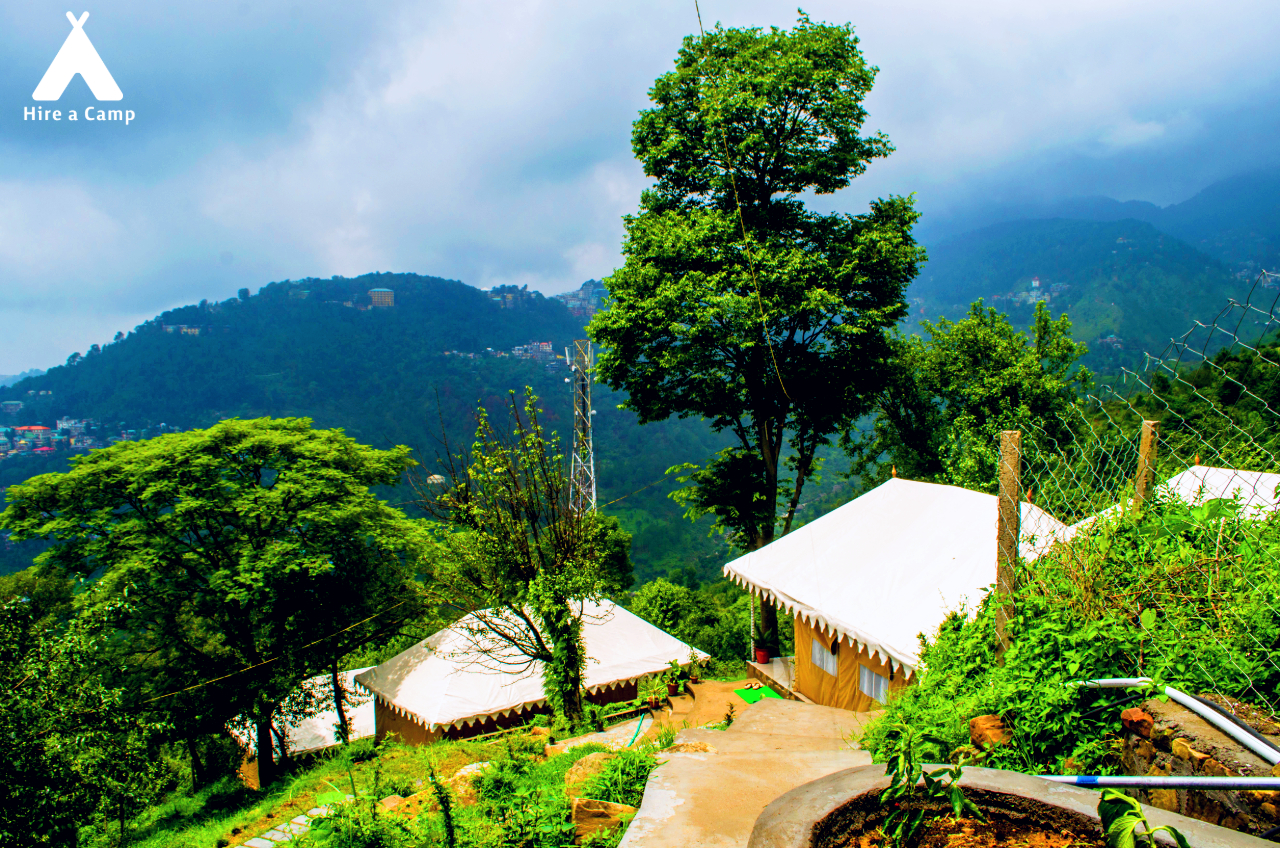
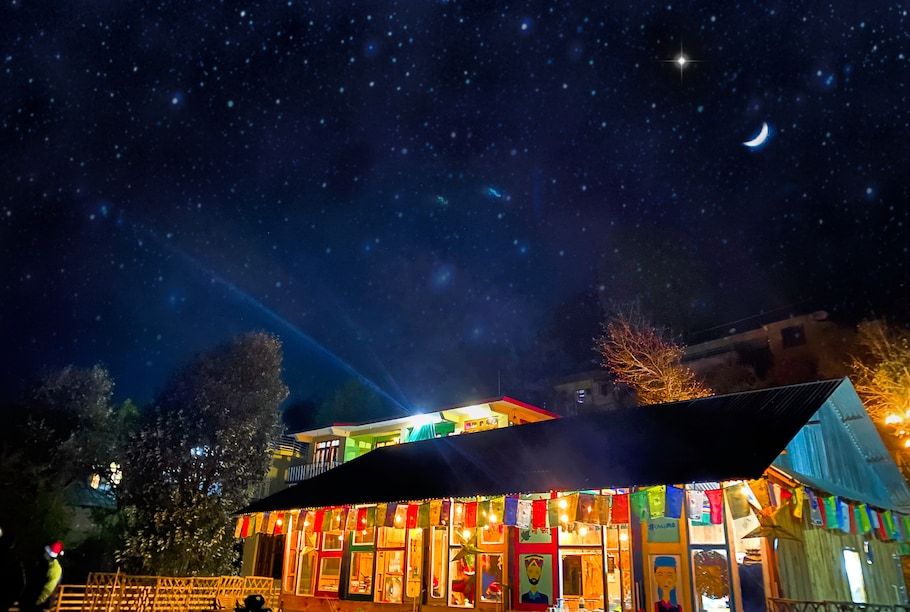
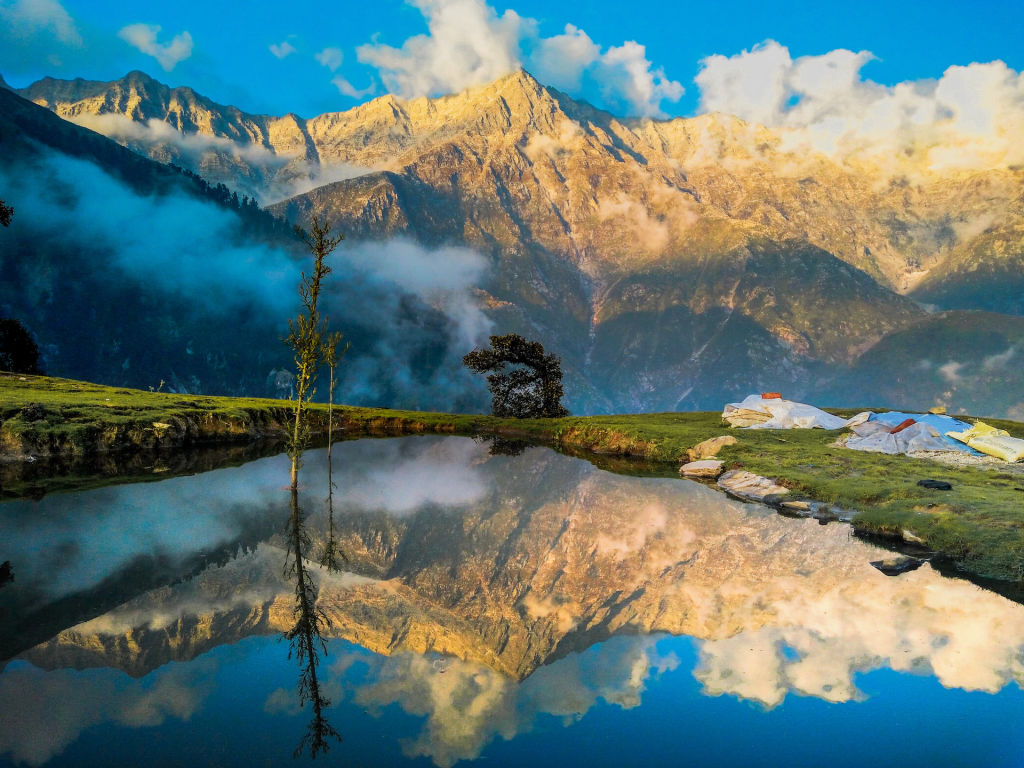
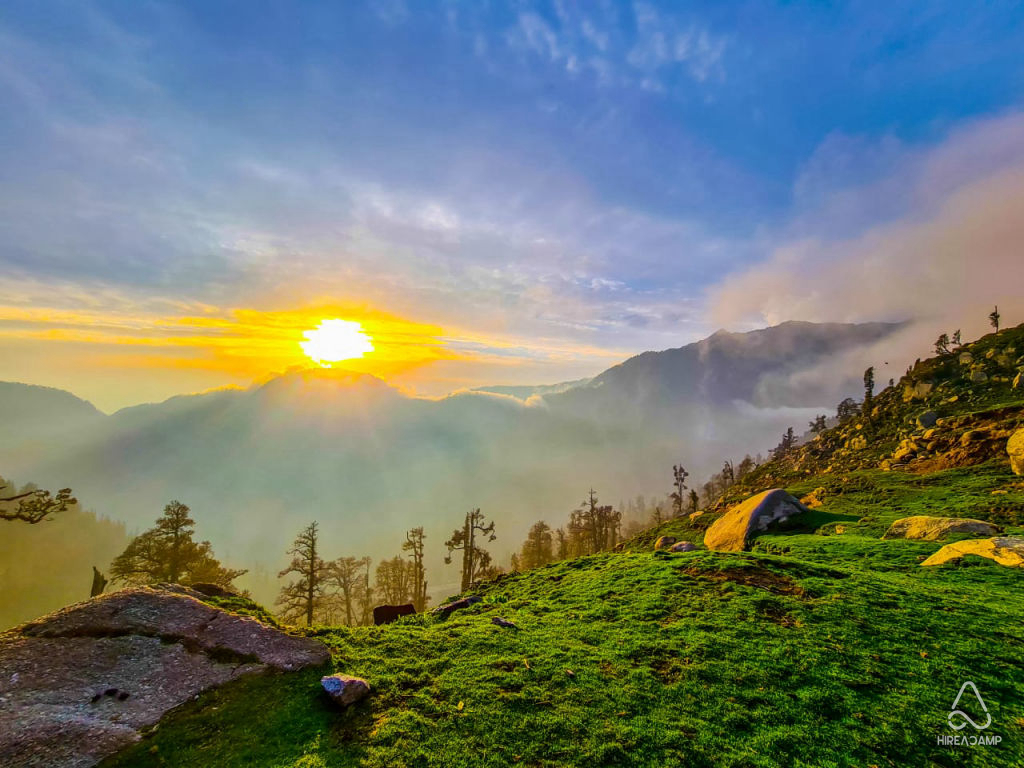
If you prefer nature-focused accommodations, the valley and its surrounding foothills feature private farm stays, mountain homestays, and open-air campsites. You can browse and book verified camps, homestays, and outdoor getaways in the area through HireACamp.
Frequently asked questions
How far is Kangra Fort from Ludhiana?
Kangra Fort is roughly 173 to 220 kilometers from Ludhiana by road, which typically takes around 4 to 4.5 hours under standard driving conditions.
How much time is needed to visit Kangra Fort?
Most visitors spend between two and three hours exploring the gates, inner courtyards, historical temple remains, and rampart viewpoints.
Can Kangra Fort be visited as a day trip from McLeod Ganj?
Yes, McLeod Ganj is located approximately 18 kilometers away in straight-line distance, making Kangra Fort an easy day excursion by car or local taxi.
What should visitors wear when touring the fort?
Comfortable clothing and sturdy walking shoes with good grip are recommended, as the fort grounds include steep climbs, uneven surfaces, and stone steps.
Are there temples inside Kangra Fort?
Yes, the fort complex contains the historic stone remains of several ancient shrines, including temples dedicated to Ambika Devi and Lakshmi Narayan, as well as early Jain carvings.
Where you'll be
37P3+WHF, Old Kangra, Kangra, Himachal Pradesh 176001 · 4 stays nearby shown with prices
As seen on Instagram
The posts this guide is built from
Stays near Kangra Fort
Book a place to stay close by
More places near Kangra Fort
Within 20 km

Built from 1 Instagram post by 1 creator. Every tip links back to the post it came from, and where creators disagree we show both sides. Guide updated 23 Oct 2026.






