
Kangra Jain Shwetambar Tirth
Temple near Kangra, Himachal Pradesh
2.4 km from Kangra
The nearest town, for stays, food and fuel.
Kangra Jain Shwetambar Tirth is a revered Jain pilgrimage site dedicated to Bhagwan Adinath, located right beside the historic Kangra Fort in Himachal Pradesh. Travellers and pilgrims visit to offer prayers, admire the antique idols, and experience a quiet spiritual space steeped in regional history. Its unique setting against the backdrop of the Kangra Valley makes it a meaningful stop for anyone exploring the heritage of lower Himachal.
Getting there
By road
- From KangraNearest town6 min · 2.7 km
- From Ludhiana3 hr 55 min · 181 km
- From Amritsar4 hr 10 min · 206 km
- From Chandigarh4 hr 55 min · 233 km
Typical drive times without traffic. Stations and airports from OLA Maps; distances and typical drive times from OpenStreetMap (© OpenStreetMap contributors); notes from creators' Reels.
About Kangra Jain Shwetambar Tirth
Written with AI from map data and general knowledge. Check prices and timings locally before you go.
Understanding Kangra Jain Shwetambar Tirth
Kangra Jain Shwetambar Tirth, also known locally as Shri Bhagwan Adinath Jain Temple, stands in the historic precinct of Kangra town, right adjacent to the celebrated Kangra Fort. While Himachal Pradesh is widely recognized for its ancient Hindu temples and Tibetan Buddhist monasteries, the presence of an ancient Jain sacred site here highlights the broad cultural tapestry of the Kangra Valley. The tirth is dedicated to Rishabhanatha, also called Bhagwan Adinath, who is venerated as the first Tirthankara of Jainism.
Pilgrims and cultural travellers visit this temple not only for devotional reasons but also to understand how Jainism thrived alongside regional hill dynasties. The site represents centuries of spiritual continuity in the valley. Despite being in an area that saw numerous historical sieges and political shifts, the presence of the Jain community and its sacred spaces endured, making the tirth a deeply respected sanctum in the district.
The Spiritual and Historical Legacy
The shrine traces its lineage across several centuries, with ties to ancient trading routes that once passed through northern India into the Himalayan foothills. Jain merchants and monks who traversed these mountain trade routes established places of worship along the way. Kangra, being a major political and commercial capital under the Katoch rulers, naturally welcomed diverse traditions.
The sanctum houses consecrated idols of the Tirthankaras, primarily Bhagwan Adinath, alongside other revered figures of the Shwetambar tradition. The idols are carved with classical precision, reflecting calm expressions of meditative stillness. Visiting the temple allows one to step away from the bustling town roads and enter an environment focused on reflection, self-discipline, and harmlessness, which lie at the heart of Jain philosophy.
Read more
Best time to visit Kangra Jain Shwetambar Tirth
The Kangra Valley experiences distinct mountain seasons, each offering a different atmosphere for travel. The most comfortable time to visit Kangra Jain Shwetambar Tirth is between September and April. During the autumn months of September, October, and November, the skies remain clear following the rains, and the weather is pleasantly cool, allowing visitors to walk around the complex and explore the nearby fort without fatigue.
Winter arrives in December and extends through February. While high peaks in the nearby Dhauladhar range receive snow, Kangra town itself remains crisp and cold with sunny afternoons, making it very suitable for sightseeing. March and April bring comfortable spring warmth and blossoming greenery. The summer months of May and June can get warm during midday, so early morning or late afternoon visits are recommended. The monsoon months between July and August bring heavy downpours to the valley, which can occasionally cause road disruptions, so check local weather updates if planning a journey then.
How to reach the temple
Kangra Jain Shwetambar Tirth is situated in Old Kangra, immediately next to the entrance of Kangra Fort, making it straightforward to reach by road, rail, or air. Kangra town is well connected to major urban hubs across Himachal Pradesh, Punjab, and Chandigarh.
By air, the nearest airfield is Kangra Airport at Gaggal, which lies roughly fifteen kilometres away and connects with domestic flights from major cities like Delhi. From the airport, local taxis and buses run directly towards Old Kangra. By rail, the broad-gauge station at Pathankot in Punjab serves as the primary gateway, situated approximately eighty-five kilometres away. From Pathankot, you can hire a cab or take a regular state transport bus, or experience the scenic narrow-gauge Kangra Valley toy train to Kangra Mandir station.
Road networks are well maintained. Regular state transport buses and private vehicles connect Kangra with Dharamshala, McLeod Ganj, Hoshiarpur, and Chandigarh. Once in Kangra town, local auto-rickshaws and cabs drop visitors right outside the fort and temple complex.
Etiquette and tips for your visit
As with any active place of worship, Kangra Jain Shwetambar Tirth follows customary spiritual etiquette that visitors must observe. Modest clothing that covers the shoulders and knees is appropriate. Before entering the sanctum, you must take off your footwear, and leather items such as belts, wallets, and bags are typically not allowed inside the main prayer hall.
Photography regulations vary across different parts of the temple complex, so it is best to ask local caretakers or priests before taking photographs of the idols or inner sanctum. Because people visit this shrine for meditation and worship, maintain silence and avoid loud conversations. Keep in mind that temple timings and daily prayer routines can vary throughout the year, so it is wise to arrive during daylight hours or verify the schedule locally upon your arrival in Kangra.
Places to visit nearby
A visit to the tirth pairs naturally with exploring the rich historical and spiritual circuit of the Kangra Valley. Since the temple sits right beside Kangra Fort, walking through the massive stone ramparts, watchtowers, and ancient courtyards of the fort is effortless. The fort offers commanding views of the Banganga and Manjhi river valleys below.
Just about two kilometres away lies the famed Bajreshwari Devi Temple, one of the major Shakti Peethas in northern India, drawing thousands of devotees year-round. Further west, about eleven kilometres away, stands the remarkable eighth-century monolithic rock-cut temple complex of Masroor, often called the Himalayan rock-cut wonder. If you prefer heading uphill towards the pine-forested mountains, the vibrant settlement of McLeod Ganj and the scenic trails leading to Triund lie within an eighteen-kilometre drive from Kangra.
Where to stay near Kangra
Travellers visiting Kangra have a variety of stay options depending on their travel preferences. Kangra town offers simple guest houses and modest hotels that are convenient for pilgrims wishing to stay close to the temples and fort.
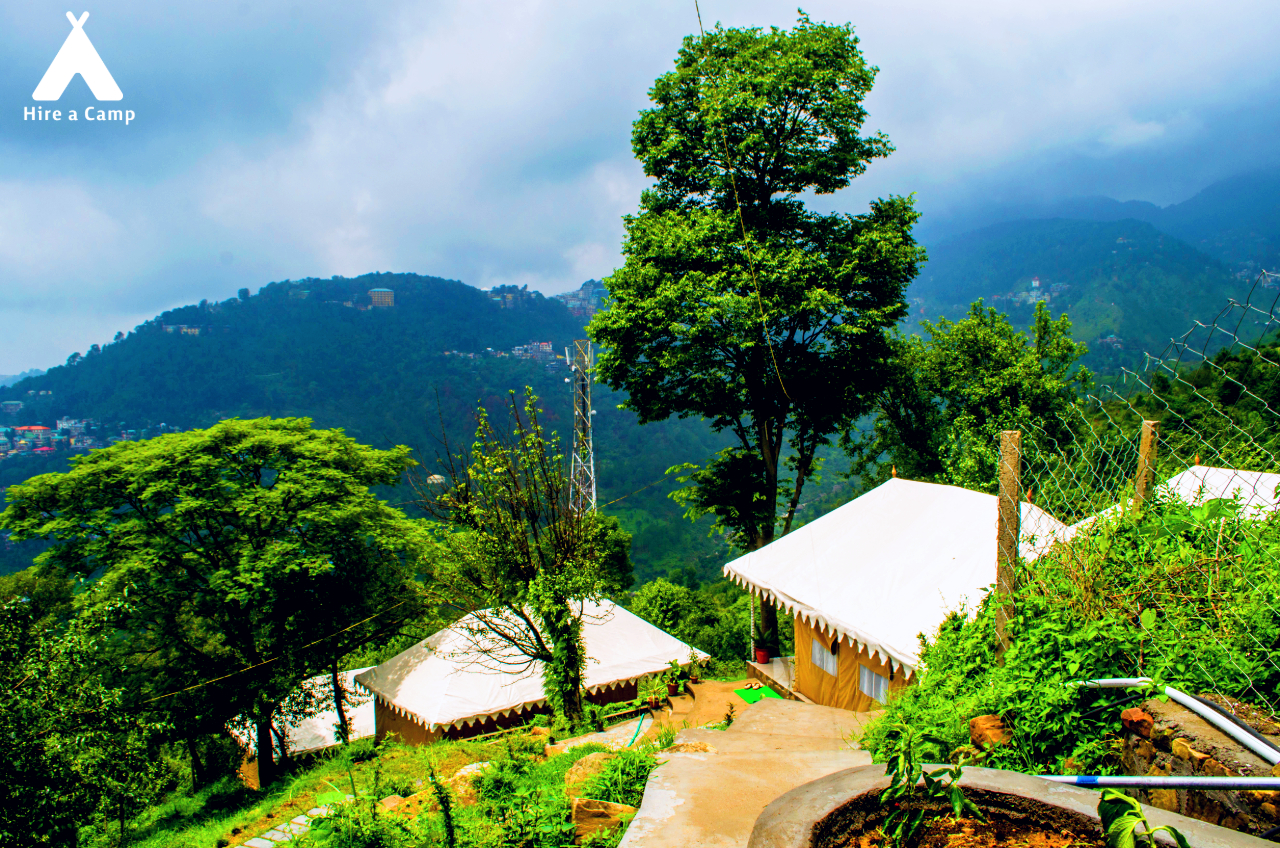
For those who prefer a tranquil getaway amidst orchards, mountain streams, or hillside pine forests, experiential stays, homestays, and rustic riverside campsites can be found on HireACamp. Staying slightly outside the town centre allows you to enjoy the quiet rural atmosphere of the valley while remaining within a short drive of Kangra Jain Shwetambar Tirth and the surrounding historical landmarks.
Frequently asked questions
Where is Kangra Jain Shwetambar Tirth located?
The temple is located in Old Kangra in Himachal Pradesh, right next to the entrance of the historic Kangra Fort.
Which deity is the temple dedicated to?
Kangra Jain Shwetambar Tirth is dedicated to Bhagwan Adinath, also known as Rishabhanatha, the first Tirthankara in Jainism.
Are there specific rules for visitors at the temple?
Visitors should dress modestly, remove footwear before entering, and refrain from carrying leather articles into the inner prayer area. It is best to ask permission locally before taking photographs.
Can I visit the temple along with Kangra Fort?
Yes, because the temple is located immediately adjacent to Kangra Fort, travellers can easily explore both sites during the same visit.
What is the best way to travel to Kangra from Delhi?
You can take a direct flight to Kangra Airport at Gaggal, board an overnight train to Pathankot followed by a short taxi drive, or travel by overnight bus directly to Kangra town.
Where you'll be
Shri Bhagwan Adinath Jain Temple, Kangra · 4 stays nearby shown with prices
Stays near Kangra Jain Shwetambar Tirth
Book a place to stay close by

More places near Kangra Jain Shwetambar Tirth
Within 20 km


Built from 0 Instagram posts by 0 creators. Every tip links back to the post it came from, and where creators disagree we show both sides.


