
Bhairavnath Temple
Temple near Kedarnath, Uttarakhand
500 m from Kedarnath
The nearest town, for stays, food and fuel.
Bhairavnath Temple is a revered Himalayan shrine perched on a high ridge overlooking the Kedarnath valley in Uttarakhand. Dedicated to Bhairava, the fierce guardian deity of the Kedarnath Dham, the temple holds deep significance for pilgrims completing their spiritual circuit. Visitors make the short uphill journey not only for blessings but also to witness panoramic views of the surrounding glacier-clad peaks and the Mandakini river basin.
Getting there
By road
- From Dehradun5 hr 10 min · 249 km
- From New Delhi8 hr 25 min · 461 km
- From Chandigarh8 hr 50 min · 418 km
Typical drive times without traffic. Stations and airports from OLA Maps; distances and typical drive times from OpenStreetMap (© OpenStreetMap contributors); notes from creators' Reels.
About Bhairavnath Temple
Written with AI from map data and general knowledge. Check prices and timings locally before you go.
About Bhairavnath Temple
Bhairavnath Temple stands on a rocky knoll south of the famous Kedarnath Temple, serving as an enduring sentinel over the sacred alpine settlement. Dedicated to Lord Bhairava, an avatar of Lord Shiva associated with protection and fierce devotion, the shrine is traditionally regarded as the Kshetrapal, or guardian spirit, of Kedarnath. According to enduring mountain traditions, Bhairavnath protects the sacred valley and the main shrine from destructive elements, especially during the harsh winter months when heavy snowfall leaves the town uninhabited.
Unlike grand enclosed sanctums, the shrine of Bhairavnath is traditionally simple and open to the elements, featuring an idol, ancient stones, and sacred iron tridents planted into the bedrock. Pilgrims arriving in Kedarnath consider their journey incomplete without paying homage at Bhairavnath Temple. Visiting this high vantage point combines intense spiritual devotion with a humbling encounter with the sheer scale of the Garhwal Himalayas.
The Trek to Bhairavnath Temple
The path to Bhairavnath Temple begins from the southern end of the Kedarnath temple settlement. It is an ascent along a marked dirt-and-stone trail that zigzags up the adjacent ridge. While the distance itself is relatively short, usually taking between twenty to forty minutes depending on individual stamina, the trail climbs steadily, making it a moderately demanding walk in the thin mountain air.
As you climb, the settlement of Kedarnath shrinks below, revealing the layout of the valley, the temple complex, and the vast glacial moraines behind it. The open ridge offers unimpeded sights of towering snowy peaks, including Kedarnath Peak, Kedar Dome, and the surrounding ridges that wall in the valley. Pausing along the ascent to catch your breath rewards you with some of the most expansive landscape perspectives in the entire region.
Read more
Best Time to Visit Bhairavnath Temple
Because of its high altitude, access to Bhairavnath Temple is tied directly to the opening and closing dates of Kedarnath Dham, which generally spans from late spring in May through to autumn around October or November. During the winter, the entire region is blanketed in deep snow, making travel impossible.
May and June offer pleasant daytime conditions, though temperatures drop sharply as the sun dips below the mountains. The trails are bustling with activity during these early summer months. The monsoon period, extending across July and August, brings heavy rain, thick cloud cover, and heightened risks of landslides along the lower mountain roads, requiring careful planning. September and October are often regarded as the most rewarding months for travellers seeking crisp, clear weather, crystal-clear Himalayan horizons, and comfortable daytime walking temperatures.
How to Reach Bhairavnath Temple
Reaching Bhairavnath Temple requires travelling to the Kedarnath valley first. The journey usually begins from major transport hubs such as Rishikesh, Haridwar, or Dehradun, which are well-connected by train and road. From these gateway cities, road routes follow the course of the Alaknanda and Mandakini rivers through towns such as Devprayag, Srinagar, and Rudraprayag, continuing onwards towards Guptkashi, Sonprayag, and Gaurikund.
Gaurikund serves as the traditional roadhead from which the main walking trail to Kedarnath begins. Travellers undertake a long and steep mountain trek from Gaurikund to reach the Kedarnath valley, navigating paved paths along the Mandakini gorge. Once you arrive at the Kedarnath settlement, you can make the final uphill walk along the marked footpath leading directly to the Bhairavnath shrine on the ridge.
Tips for Your Visit
The primary factor to keep in mind when visiting Bhairavnath Temple is the altitude. Even if you have comfortably reached Kedarnath, the additional short, steep climb to the temple can cause breathlessness. Take small, steady steps, pause frequently, and maintain adequate hydration to prevent mountain sickness.
Weather conditions in the high Himalayas can shift within minutes. Clear blue skies can quickly turn into gusty winds, heavy cloud cover, or sudden drops in temperature. Always wear sturdy trekking shoes with good grip and carry warm layers, a windproof outer jacket, and rain protection regardless of the season. Photography lovers should bring extra batteries, as freezing temperatures cause camera and phone batteries to drain much faster on the ridge.
Places to Visit Nearby
The entire Kedarnath basin offers numerous natural and spiritual landmarks within reachable distance for adventurous walkers. Below the ridge sits Kedarnath Dham itself, one of the twelve Jyotirlingas and the focal point of the region. Exploring the temple courtyards and the surrounding settlement reveals ancient stone architecture and historic traditions of Himalayan pilgrimage.
For seasoned trekkers equipped with local guidance, paths lead towards high glacial lakes such as Vasuki Tal, situated in an alpine basin surrounded by jagged summits. Further down the valley, connected by mountain roads, lies the historic village of Triyuginarayan, famed for its ancient temple associated with celestial marriage lore. The broader Mandakini valley is also dotted with high vantage points like Chandrashila Peak, which can be explored along the return route through the district.
Where to Stay near Bhairavnath Temple
There are no independent lodging facilities at Bhairavnath Temple itself, as the shrine is purely an open place of worship on an exposed ridge. Travellers rest and base themselves in the Kedarnath temple town situated below, where basic pilgrim accommodation, guesthouses, and dormitories are established for the yatra season.
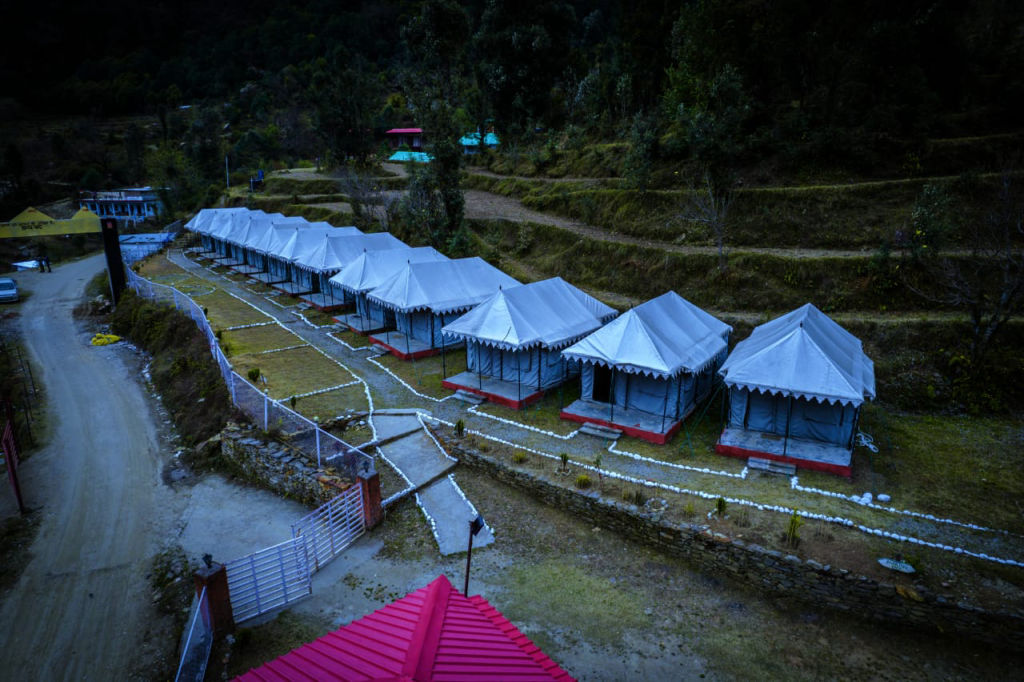
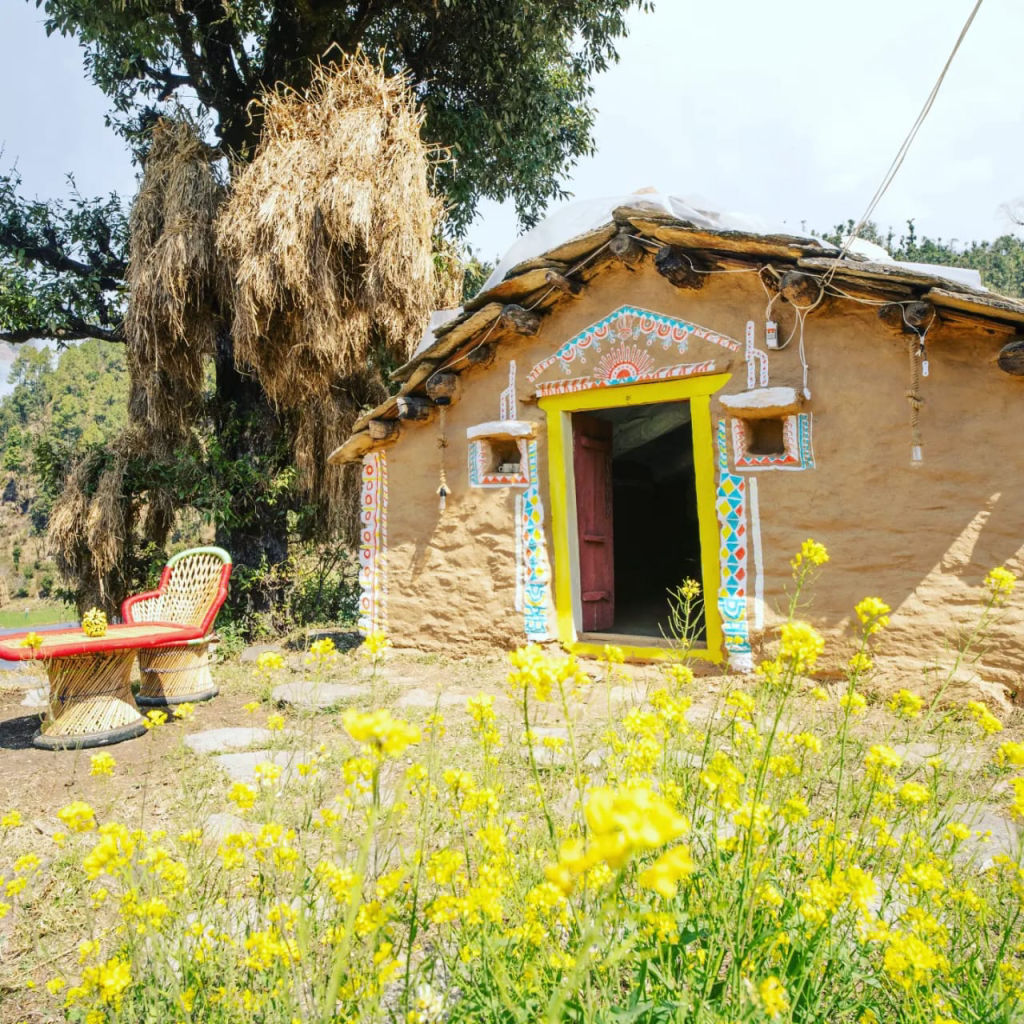
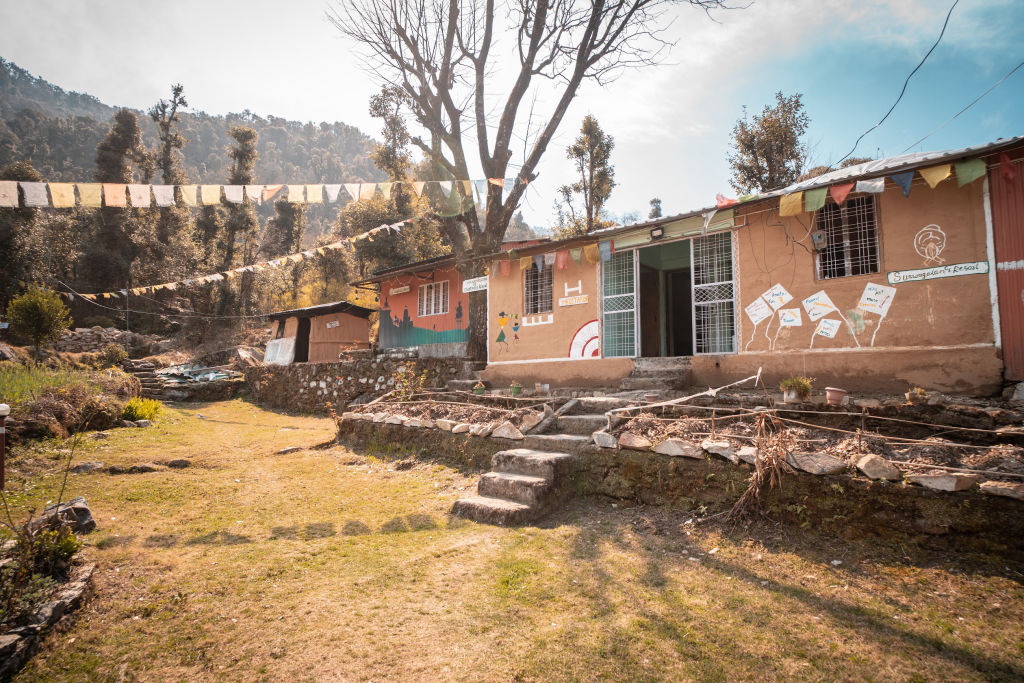
For those seeking greater comfort, varied stays are available lower down the valley in places like Gaurikund, Sonprayag, Sitapur, Phata, and Guptkashi. To find peaceful homestays, riverside retreats, and experiential camps spread across the scenic hills and meadows of Uttarakhand, travellers can explore options on HireACamp.
Frequently asked questions
What is the religious significance of Bhairavnath Temple?
Bhairavnath is revered as the protective guardian deity of the Kedarnath temple and its valley. Local belief holds that he guards the shrine during the frozen winter months, making a visit here an essential completion of the pilgrimage.
How long does it take to walk from Kedarnath to Bhairavnath Temple?
The walk takes approximately twenty to forty minutes from the Kedarnath temple settlement. Although the distance is short, the path is an uphill climb over rocky mountain terrain.
Is Bhairavnath Temple open throughout the year?
No, the temple is only accessible during the Char Dham Yatra season between May and October or November. The entire valley is inaccessible and covered in heavy snow during the winter.
What kind of clothing should I wear for the visit?
Dress in warm layers, including thermal wear, a fleece, and a windproof jacket, as the exposed ridge is prone to cold mountain winds. Sturdy walking shoes with reliable grip are essential for the uneven stone path.
Where you'll be
Kedarnath, UT · 3 stays nearby shown with prices
Stays near Bhairavnath Temple
Book a place to stay close by
More places near Bhairavnath Temple
Within 20 km
Built from 0 Instagram posts by 0 creators. Every tip links back to the post it came from, and where creators disagree we show both sides.






