
Bharmour
Destination in Himachal Pradesh
Bharmour is a historic mountain town nestled in the Budhil valley of Himachal Pradesh, once the ancient seat of the kingdom of Chamba. Surrounded by terraced fields, deodar forests, and the towering ridges of the Pir Panjal and Dhauladhar ranges, the town is celebrated for its centuries-old temples and its position as the base for journeys to sacred alpine peaks. Travellers visit Bharmour to immerse themselves in indigenous Gaddi culture, explore historic stone architecture, and set out on remote high-altitude trails.
Getting there
By road
- From Amritsar6 hr · 292 km
- From Ludhiana7 hr 15 min · 349 km
- From Chandigarh8 hr 55 min · 412 km
Typical drive times without traffic. Stations and airports from OLA Maps; distances and typical drive times from OpenStreetMap (© OpenStreetMap contributors); notes from creators' Reels.
About Bharmour
Written with AI from map data and general knowledge. Check prices and timings locally before you go.
Understanding Bharmour and its heritage
Perched at an elevation of over two thousand metres above sea level, Bharmour holds a prominent place in the history and geography of Himachal Pradesh. Formerly known as Brahmpura, it served as the original capital of the Chamba state for centuries before the rulers shifted down to the banks of the Ravi River. The town remains the cultural heartland of the Gaddi people, a semi-nomadic community known for their distinctive pastoral lifestyle, woollen attire, and deep spiritual connection to the surrounding mountains.
At the centre of the town lies the famous Chaurasi temple complex, a spacious paved courtyard housing eighty-four major and minor shrines built in traditional hill and wooden pagoda architecture. Dedicated to various deities, these temples date back to early medieval centuries and showcase remarkable woodcarvings, slate roofs, and stone craftsmanship. The presence of ancient deodar trees and views of snow-dusted crags in the backdrop give the town a serene, grounded atmosphere that sets it apart from busier commercial hill stations.
Things to do in Bharmour
Spending time in Bharmour is primarily about slow exploration, heritage appreciation, and soaking in the daily rhythms of village life. Walking through the Chaurasi complex offers a rare look at preserved Himalayan wood and stone carvings. Watching early morning prayer rituals and interacting respectfully with local residents gives visitors insight into traditions that have endured for generations.
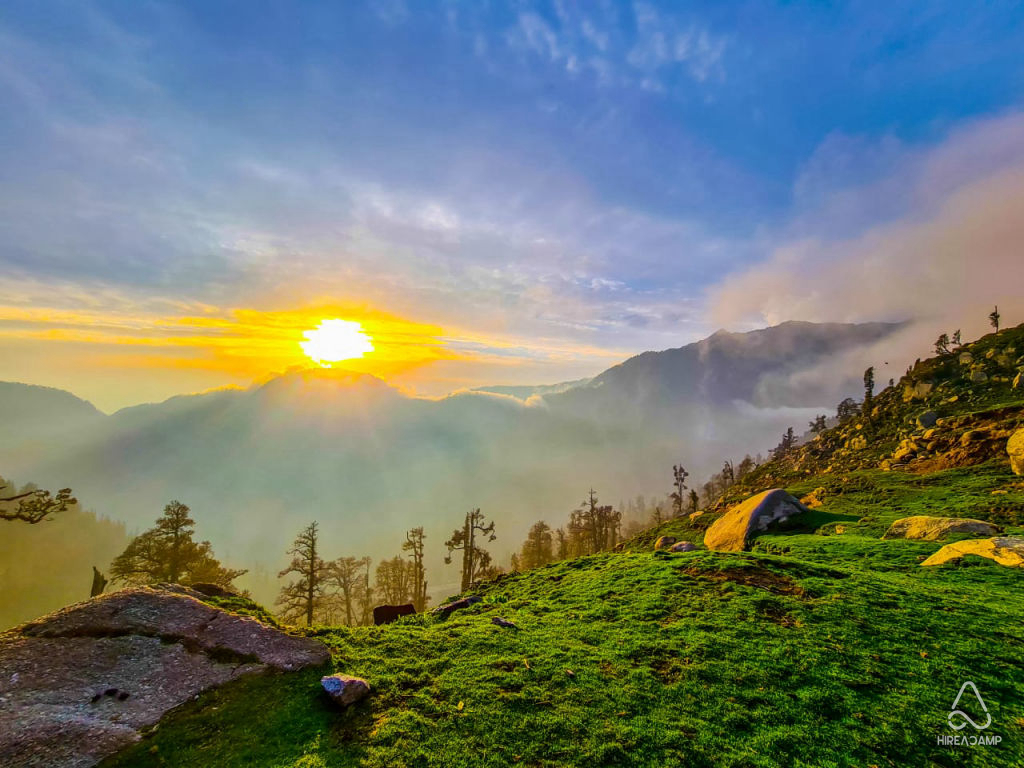
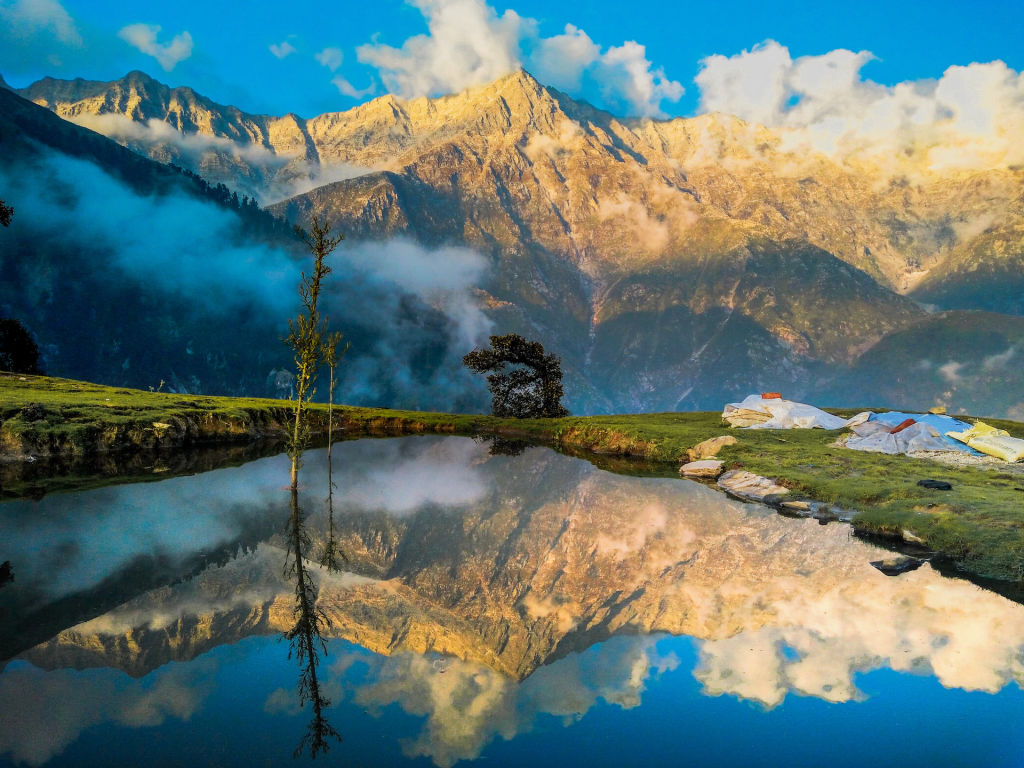
Beyond temple visits, walking along the paths that wind out of town into surrounding hamlets is one of the best ways to experience Bharmour. Narrow trails cut through apple orchards, terraced millet plots, and shaded pine groves, offering dramatic views across the canyon-like Budhil gorge. You can observe local weaving traditions, where coarse sheep wool is handspun and woven into durable blankets and garments. For those interested in landscape photography, clear mornings provide clean perspectives of the rugged ridgelines rising toward the Dhauladhar crest.
Read more
Trekking routes and trails around Bharmour
Bharmour is well known among hikers and mountaineers as a gateway to challenging high-altitude terrain. The region serves as the starting point for the annual pilgrimage route toward the high-altitude lake of Manimahesh, which sits under the shadow of the revered Kailash peak. Even outside the pilgrimage season, trailheads leading out of the valley take experienced trekkers into wild alpine pastures and glaciated zones.
Several historic passes connect the Bharmour valley to Kangra on the southern side of the Dhauladhar range. High trails cross over notches such as Indrahar Pass, Talang Pass, and Singhar Pass, leading across steep scree, boulder fields, and perennial snow beds. Along these routes lie remote shelters like Lahesh Cave, traditionally used by Gaddi shepherds when moving their flocks between seasonal pastures. Glacial bodies such as Talang Glacier and sacred tarns like Nag Dal, Nag Chhatri Dal, and Lam Dal are tucked into the high cirques, making the area a rewarding destination for self-sufficient hikers and guided trekking groups.
Places to visit near Bharmour
The broader valley around Bharmour contains several quiet villages and historic monuments worth visiting on day trips. Roughly fifteen kilometres downstream, near the confluence of the Budhil and Ravi rivers, stands the ancient Chatrari Devi Temple. Constructed primarily of wood with intricate relief carvings depicting mountain deities and floral patterns, this temple is considered one of the finest preserved examples of early wooden architecture in the western Himalayas.
Further down the valley, the heritage town of Chamba offers access to royal palaces, traditional stone stepwells, and museums displaying miniature paintings. Across the formidable mountain wall to the south lies the Kangra valley, with towns like McLeod Ganj and Dharamshala. While they are close as the crow flies, reaching Kangra on foot requires traversing strenuous high-altitude passes, whereas vehicular travel winds all the way down through the Ravi valley and around the mountain ranges.
Best time to visit Bharmour
The climate in Bharmour varies significantly across the year, shaping what activities are possible. Spring and early summer, spanning from April to June, bring pleasant daytime temperatures, blooming fruit orchards, and clear skies. This period is ideal for general sightseeing, cultural travel, and day hikes around the surrounding villages, as roads are generally clear and accessible.
The late summer and early autumn months, from September to October, offer crisp air, settled weather, and exceptional visibility after the monsoon clouds recede. This window is particularly favoured by trekkers attempting the high passes and alpine lakes. Winter arrives in late November and brings heavy snowfall and freezing temperatures through March. During this period, higher trails become impassable, and life in the town slows down considerably, appealing mostly to travellers looking to experience deep winter stillness in a snow-covered hill town.
How to reach Bharmour
Reaching Bharmour requires a scenic mountain drive through the lower Chamba valley. The primary road approach runs from Pathankot in Punjab through Dalhousie or Banikhet down to Chamba, continuing eastward along the river canyon toward Bharmour. Pathankot serves as the closest broad-gauge railway junction, connected by frequent trains to major northern Indian cities.
The nearest domestic airport is at Gaggal near Kangra, from where you can hire vehicles or take regional buses heading toward Chamba and onwards to Bharmour. Mountain roads can experience disruptions during heavy rains or winter snowfalls, so it is advisable to check local road conditions and weather forecasts before setting out.
Where to stay in Bharmour
Accommodations in Bharmour cater primarily to pilgrims, independent trekkers, and heritage enthusiasts seeking an authentic hill-town stay. Traditional guesthouses and family-run homestays are scattered throughout the town and in nearby villages, providing warm hospitality, home-cooked regional meals, and direct contact with local customs.
For those who prefer a more outdoor setting, seasonal campsites and riverside properties operate along the valley floor and on pasture fringes outside the main settlement. You can explore and book verified camps, homestays, and rustic stays in and around Bharmour on HireACamp to find a base that suits your travel plans.
Frequently asked questions
What is Bharmour famous for?
Bharmour is celebrated for the ancient Chaurasi temple complex, its rich Gaddi tribal culture, and its role as the traditional starting point for trails heading into the high Dhauladhar and Pir Panjal ranges.
Which passes connect Bharmour to the Kangra valley?
Several demanding shepherd passes, including Indrahar Pass, Talang Pass, and Singhar Pass, cross the crest of the Dhauladhar range to connect the Bharmour valley with Kangra.
Is Bharmour accessible throughout the winter?
The road to Bharmour generally stays open for much of the year, but severe winter snowfall can lead to temporary closures. Visitors travelling between December and February should verify current road conditions locally before starting.
Can I visit Bharmour on a day trip from Chamba?
Yes, Bharmour can be visited on a day excursion from Chamba town, though staying overnight allows for a much more relaxed visit to the temples and nearby walking trails.
Where you'll be
2 stays nearby shown with prices
Stays near Bharmour
Book a place to stay close by
Things to do in Bharmour
48 places creators recommend within 30 km
Built from 0 Instagram posts by 0 creators. Every tip links back to the post it came from, and where creators disagree we show both sides.






